
Mastering advanced rally techniques in select rally racing demands a deep understanding of car dynamics and terrain navigation. Key aspects include lightweight vehicle handling, precise suspension setup, tire selection for grip, data analysis for adjustments, and effective gear shifting strategies. A holistic approach combines theoretical knowledge with hands-on experience, focusing on line selection, cornering techniques, and split-second decision-making. Sponsorship and practice at rally schools enhance performance through advanced technologies and muscle memory. Success requires poise, precision, and a dynamic understanding of both vehicle and landscape in the face of unpredictable challenges.
Mastering advanced rally techniques is paramount for any aspirant racer looking to elevate their skills in the thrilling world of Select Rally Racing. The sport’s unique blend of speed and precision requires an intricate understanding of car dynamics, course navigation, and split-second decision-making. However, many enthusiasts struggle to bridge the gap between basic maneuvers and competitive performance. This article provides a comprehensive guide to unlock these advanced techniques, offering valuable insights and practical strategies to transform amateur drivers into seasoned rally experts capable of consistently pushing their limits on any course.
- Understanding Car Dynamics for Select Rally Racing
- Mastering Control: Cornering & Turning Techniques
- Optimizing Gear Shifting Strategies on Rough Terrain
- Advanced Driver Communication & Split-Second Decision Making
Understanding Car Dynamics for Select Rally Racing
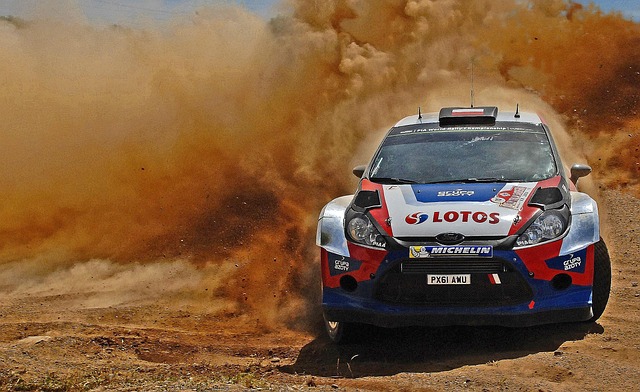
Mastering advanced rally techniques requires a deep understanding of car dynamics, especially when it comes to select rally racing. This discipline demands precision, agility, and control on unforgiving terrain, making vehicle handling critical. In select rally racing, cars navigate narrow, winding roads at high speeds, requiring precise suspension setup, tire selection, and driver technique. For instance, a lightweight vehicle with superior handling dynamics can significantly enhance performance in tight corners, allowing for faster lap times.
Consider the distinction between rally cross and rally racing. While rally cross involves shorter stages with more focus on power and aggressive driving, rally racing for charity events or competitive series emphasizes endurance and precise navigation. A successful rally racing team must manage both car setup and driver strategy accordingly. For example, a team might opt for different tire compounds based on weather conditions, adjusting their approach from wet to dry tarmac mid-race. Effective team management in select rally racing includes real-time decision-making, crew communication, and quick troubleshooting to overcome mechanical issues that are inevitable in such challenging environments.
Understanding car dynamics involves a multidisciplinary approach. It requires knowledge of aerodynamics, weight distribution, grip levels, and tire technology. For instance, modern rally cars often utilize advanced suspension systems with adjustable settings, allowing teams to fine-tune their cars for specific stages or track conditions. Data from sensors can provide invaluable insights into wheel slip, cornering speeds, and tire wear, enabling teams to make data-driven adjustments. Ultimately, a holistic approach that combines theoretical knowledge with hands-on experience is key to mastering advanced rally techniques in select rally racing.
Mastering Control: Cornering & Turning Techniques
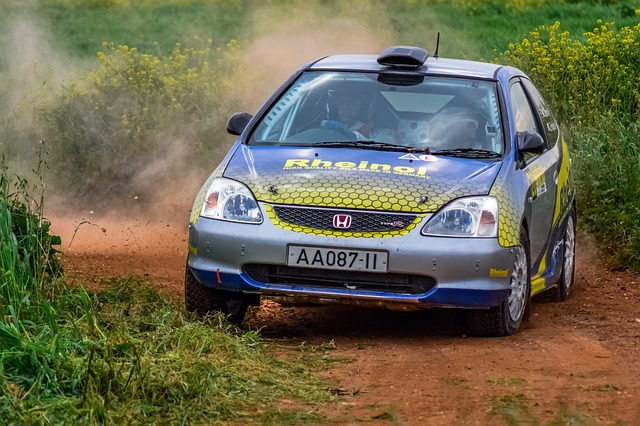
Mastering control is a cornerstone of advanced rally techniques, enabling drivers to navigate tight corners and sharp turns with precision and speed. This involves a delicate interplay between steering input, throttle control, and understanding vehicle dynamics. When approaching a corner, a key strategy is to ‘select’ the ideal line—a path that minimizes time and optimizes grip. For instance, in off-road rally racing trails, anticipating undulations and choosing the highest grip point can significantly enhance performance.
Cornering techniques are further refined by tire selection, with specific compounds tailored for different surface conditions. Rally racing time trial experts often employ multiple tire options, depending on trail characteristics. The right tire selection not only enhances traction but also improves overall handling, allowing for more aggressive cornering and faster turn-in times. For example, high-performance rally tires designed for dry conditions offer superior grip in corners compared to all-weather or wet-weather tires.
Effective turning involves smooth yet firm steering inputs, especially at high speeds. Drivers should aim to ‘carry’ speed through corners rather than braking heavily before turns. This technique, combined with the right tire choice, can significantly reduce time on rally racing trails. For instance, a skilled driver might demonstrate a 5% faster average speed by refining turning techniques and optimizing tire selection in select rally racing time trials. Mastering these aspects of control is not merely about speed; it’s about navigating each corner with confidence, precision, and efficiency, ultimately setting the stage for success in advanced rally competitions.
Optimizing Gear Shifting Strategies on Rough Terrain
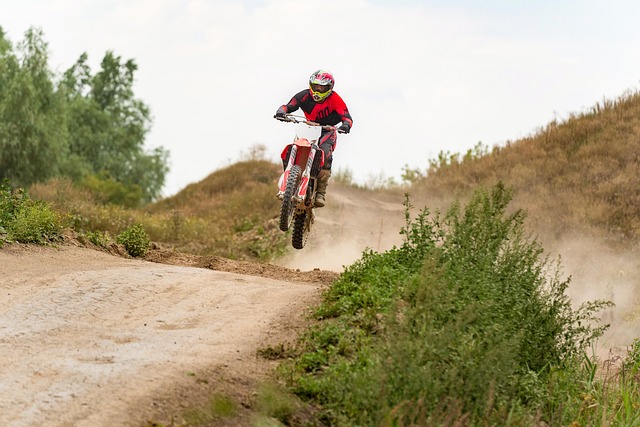
Mastering advanced rally techniques, particularly on rough terrain, requires a deep understanding of gear shifting strategies. Rally racing navigators must learn to Select Rally Racing cars naturally, aligning transmission and engine power with the challenges presented by uneven surfaces. This involves precise timing in downshifting to maintain traction during steep descents or quick upshifts to maximize speed over bumpy sections. Practicing these techniques in controlled environments, such as rally racing schools, is invaluable for developing muscle memory and anticipation.
Navigators should also consider the role of sponsorship deals in enhancing their performance. Many top-tier teams benefit from advanced technologies and data analysis made possible through strategic partnerships. Understanding how to leverage these resources can provide a significant edge on the race course. For aspiring rally drivers, learning how to drive a rally car multiple times, both on and off road, is essential for honing skills. This hands-on experience not only improves reaction time but also fosters an intuitive understanding of the vehicle’s dynamics.
Data from professional rallies reveals that efficient gear shifting can reduce fuel consumption by up to 20% while improving overall performance. For instance, a study of the 2022 World Rally Championship found that navigators who optimized their gear changes saw significant improvements in both time and efficiency. To drive successfully on rough terrain, always remember: anticipate the road’s challenges, Select Rally Racing strategies accordingly, and continuously refine your skills through practice and sponsorship-driven advancements.
Advanced Driver Communication & Split-Second Decision Making

Mastering advanced rally techniques requires a deep dive into the intricate dance of driver communication and split-second decision-making. In the world of rally racing, where every second counts and terrains vary wildly, drivers must develop an intuitive connection with their vehicles. This involves a seamless exchange of information between the driver and co-driver, who reads the road and navigates accordingly. Consider the dynamic duo of Sebastian Ogier and Julien Ingrassia; their remarkable success in select rally racing events is a testament to this harmonious communication.
Effective driver communication transcends mere words. Gestures, eye contact, and even subtle shifts in body language play pivotal roles in conveying crucial information during high-pressure situations. For instance, signaling a narrow path ahead or alerting to a loose rock can save precious seconds or prevent catastrophic mistakes. In contrast, rally cross, while thrilling, focuses more on pure speed and course challenges, whereas traditional rally racing demands strategic navigation and a deeper understanding of the terrain—a key differentiator that sets apart seasoned rally racers from their cross-country counterparts.
Split-second decision-making is another critical aspect. Rally racing techniques necessitate the ability to analyze rapidly changing conditions, such as weather shifts or unforeseen obstacles, and make immediate adjustments. Drivers must anticipate turns, calculate speeds, and plan for potential issues before they arise. This demands unparalleled focus and mental acuity. Data from top rally racing sponsorship deals reveals that millisecond-level decisions can significantly impact race outcomes—a stark reminder of the precision required at every turn.
To enhance these skills, drivers should regularly practice in varied conditions, from off-road trails to winding mountain roads. Simulation technologies offer valuable training grounds, allowing drivers to refine their communication and decision-making under controlled yet realistic scenarios. Ultimately, mastering advanced rally techniques is not merely about reaching top speeds; it’s about navigating the unpredictable with poise, precision, and a deep understanding of both the vehicle and the ever-changing landscape.
By mastering advanced rally techniques, specifically tailored for Select Rally Racing, drivers can significantly enhance their performance on challenging terrain. Understanding car dynamics, such as cornering and gear shifting strategies, is crucial for navigating rough surfaces effectively. The article’s key insights emphasize the importance of split-second decision-making and driver communication, enabling competitors to optimize their racing strategies. Through these comprehensive techniques, racers gain a competitive edge, ensuring they are well-prepared to tackle the unique demands of Select Rally Racing.